
Leopard Tree – Beautiful Garden Tree or Local Trouble Maker?
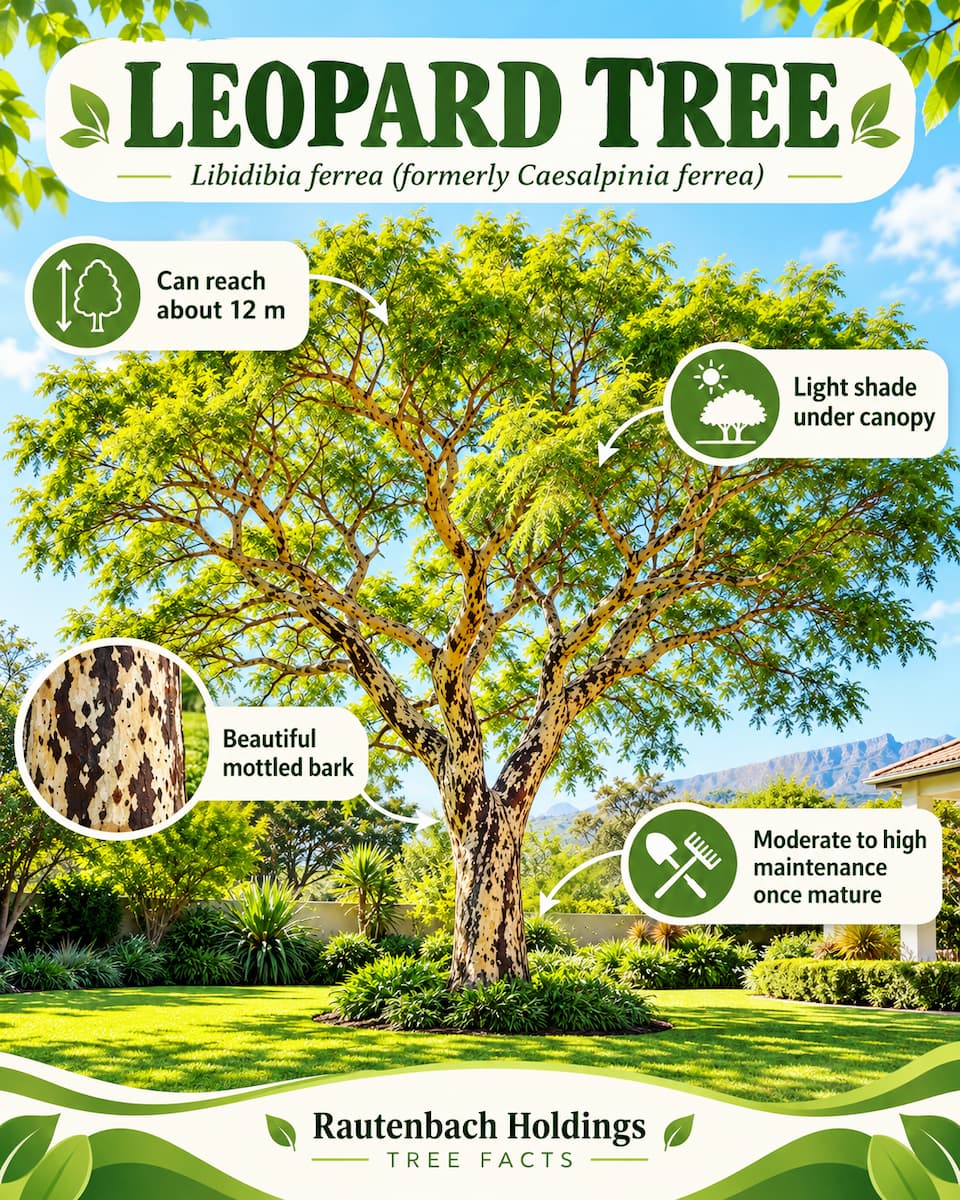
Common name: Leopard Tree / Luiperdboom
Botanical name: Libidibia ferrea (formerly Caesalpinia ferrea)
Origin: Brazil – not indigenous to South Africa
Mature size: Approximately 12 m high with a canopy around 8 m wide
Rautenbach Holdings maintenance rating: Moderate to high once mature
The Leopard Tree is one of the most attractive trees planted around Tzaneen, but it is also one of the trees Rautenbach Holdings regularly encounters with broken branches, structural problems and, in some cases, complete tree failure.
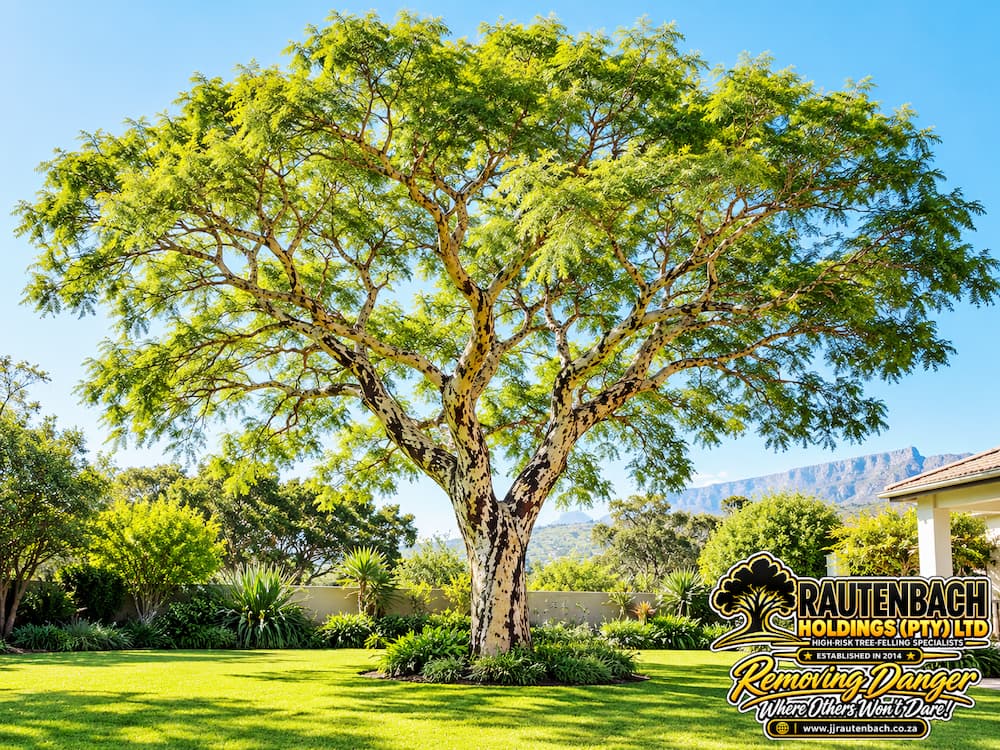
Its beautiful mottled bark, fine foliage and relatively light shade make the Leopard Tree an attractive garden and street tree. Grass and many smaller plants can also grow beneath its canopy.
But beauty does not automatically mean trouble-free. Once mature, these trees can become substantial, and their structure deserves regular attention—especially when they are growing near houses, vehicles, roads, walls or other areas where failure could cause damage.
Why Do We Watch Leopard Trees So Carefully?
In our experience around Tzaneen and surrounding areas, Leopard Trees are frequent candidates for pruning and tree-risk work because we encounter branch failures, weak sections and trees that have become unstable as they mature.
This concern is not purely anecdotal. A Limpopo study assessing urban trees in Louis Trichardt and at the University of Venda found Caesalpinia ferrea ranked first in the critical stability category at both study locations.
That does not mean every Leopard Tree is dangerous. It does mean that mature specimens should not simply be ignored because the canopy still looks green and healthy.
Warning signs worth having professionally assessed include:
- Large dead or declining branches.
- Repeated branch failures.
- Cracks or weak forks in major limbs.
- An increasing or unusual lean.
- Decay or cavities around the trunk or branch unions.
- A large canopy extending over a house, driveway or parking area.
Prune It or Remove It?
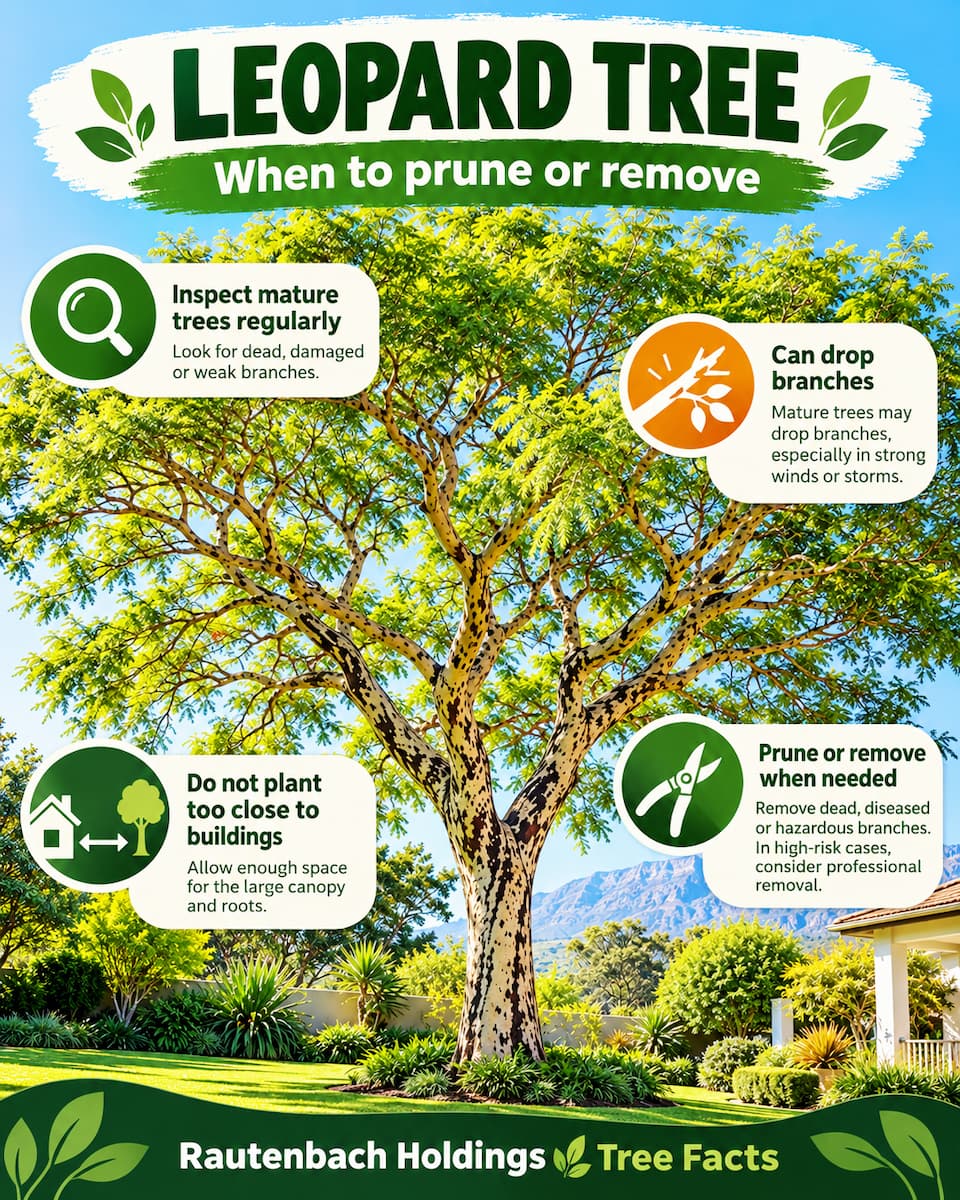
A Leopard Tree should not automatically be removed simply because it is large. Where the trunk and major structure remain sound, professional selective pruning can reduce deadwood, improve clearance and remove problematic branches while retaining the tree.
Regular inspection is particularly important as the tree matures. Corrective pruning carried out before branches become excessively large is generally preferable to waiting until a major limb fails.
Removal becomes the more sensible option where there is significant structural instability, advanced decay, repeated major branch failure, an unsafe lean or where the tree has simply outgrown a confined location and presents an unacceptable risk to nearby property.
Would We Recommend Planting a Leopard Tree?
Yes—but only where there is enough space for the mature tree.
A Leopard Tree can be a beautiful feature in a large garden, and its relatively light canopy is an advantage for homeowners who still want lawn or plants beneath the tree.
We would, however, think carefully before planting one immediately beside a house, boundary structure, driveway or permanent parking area. Always choose the position according to the size of the mature tree—not the small nursery tree being planted today.
The Rautenbach Holdings Perspective
Leopard Trees are a perfect example of why preventative tree maintenance matters. Many of the problems we are called to deal with could have been identified earlier through proper inspection and selective pruning.
If you already have a mature Leopard Tree on your property, you do not necessarily need to remove it. Have it assessed, keep an eye on its structure and deal with questionable branches before they become an emergency.
Have a mature Leopard Tree near your house, driveway, boundary wall or parking area?
Contact Rautenbach Holdings for professional tree assessment, pruning, deadwood removal or high-risk tree removal.
Call:
073 074 9716 |
079 143 0056
WhatsApp:
073 074 9716
Email:
info@jjrautenbach.co.za
Removing danger where others won’t dare.